
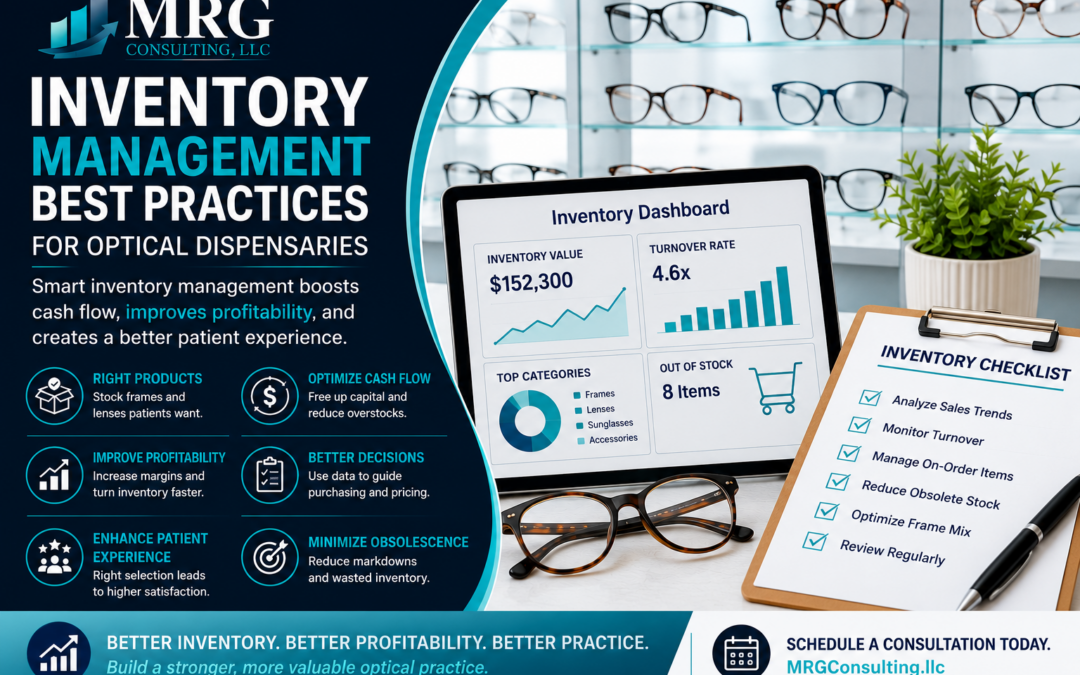
For many optometric practices, inventory represents one of the largest investments within the business. Yet inventory management is often overlooked until problems begin to impact cash flow, profitability, and patient satisfaction.
Too much inventory ties up valuable capital. Too little inventory can limit sales opportunities and frustrate patients.
The most successful optical dispensaries understand that effective inventory management is about finding the right balance between selection, profitability, and efficiency.
Inventory Is an Investment
Every frame on your board represents money invested by the practice.
While a well-stocked dispensary can improve patient choice and increase sales opportunities, excessive inventory can create challenges such as:
- Reduced cash flow
- Slower inventory turnover
- Increased carrying costs
- Obsolete inventory
- Reduced profitability
Managing inventory strategically helps ensure your investment continues to generate returns.
Monitor Inventory Turnover
One of the most important metrics in optical inventory management is turnover.
Inventory turnover measures how quickly products sell and are replaced.
Low turnover often indicates:
- Excess inventory
- Poor product selection
- Ineffective merchandising
- Outdated styles
Higher turnover generally indicates healthier inventory performance and more efficient use of capital.
Evaluate Product Performance
Not every frame deserves a permanent spot on the frame board.
Regularly reviewing sales data helps identify:
- Top-performing brands
- Slow-moving inventory
- Product gaps
- Emerging trends
Successful dispensaries make data-driven decisions rather than relying solely on personal preference or vendor recommendations.
Avoid Overstocking
Many practices accumulate inventory over time without regularly evaluating performance.
The result is often:
- Crowded displays
- Aging inventory
- Reduced profitability
- Limited flexibility for new products
A frame that has remained unsold for an extended period is no longer an asset—it has become a liability.
Regular inventory reviews help prevent this problem.
Keep Your Frame Board Fresh
Patients are attracted to displays that feel current and well-maintained.
Updating inventory regularly helps:
- Create excitement
- Improve perceived value
- Increase sales opportunities
- Enhance the shopping experience
Fresh inventory encourages repeat patients to browse and purchase more confidently.
Use Data to Guide Purchasing Decisions
Purchasing decisions should be based on performance, not guesswork.
Important factors include:
- Sales velocity
- Brand performance
- Margin contribution
- Demographic preferences
- Capture rate trends
The more information available, the more effective purchasing decisions become.
Balance Selection and Profitability
Patients appreciate having options, but more inventory does not always translate into more sales.
An effective optical department balances:
- Variety
- Brand representation
- Margin opportunities
- Inventory efficiency
The goal is not to offer everything. The goal is to offer the right products for your patient base.
Train Staff to Support Inventory Success
Inventory management is not solely a purchasing function.
Opticians play an important role by:
- Understanding product offerings
- Recommending appropriate solutions
- Promoting higher-margin products
- Providing patient feedback
Well-trained teams help maximize the value of every product on the frame board.
Inventory Directly Impacts Profitability
Every inventory decision affects:
- Cash flow
- Gross profit
- Capture rate
- Patient satisfaction
- Overall practice performance
Small improvements in inventory management often produce measurable financial gains.
Inventory Should Work for the Practice
The most successful optical dispensaries treat inventory as a strategic asset rather than simply a collection of products.
When inventory is properly managed, practices can improve profitability, increase efficiency, and create a better patient experience.
At MRG Consulting, we help optometric practices evaluate inventory performance, optimize product mix, and implement systems that improve both profitability and patient satisfaction.
Because inventory should generate revenue—not collect dust.