
Every successful optometric practice depends on the performance of its team. Yet many practice owners struggle to answer an important question:
“How do I know if my team is performing at its highest potential?”
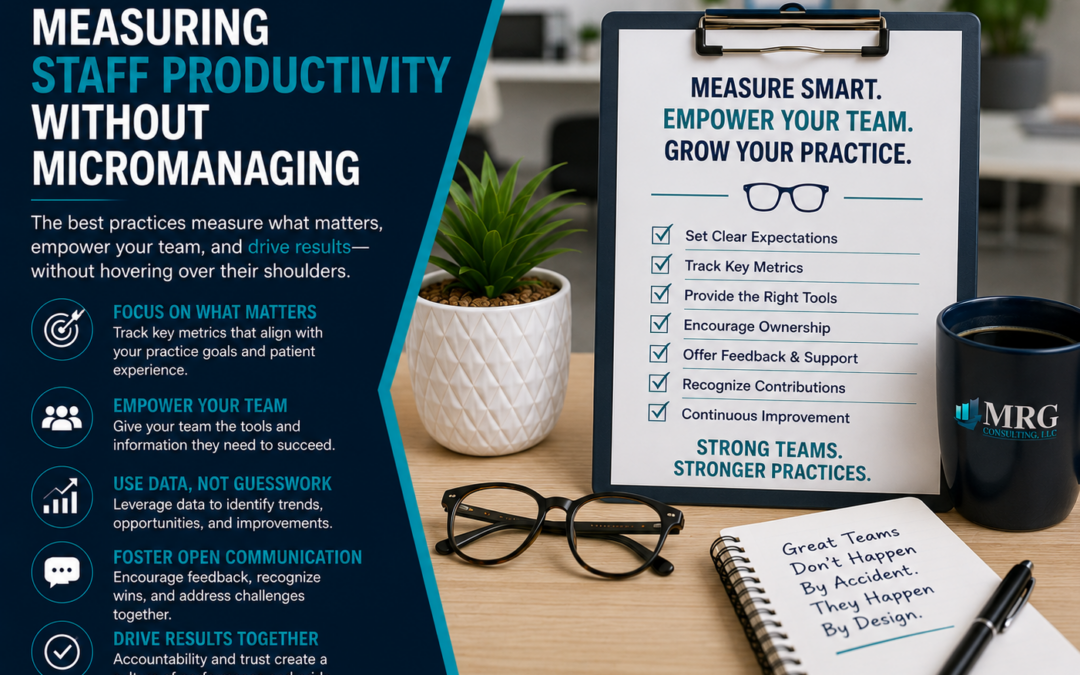
Measuring productivity is not about micromanaging employees or creating unnecessary pressure. It is about establishing clear expectations, identifying opportunities for improvement, and ensuring the practice operates as efficiently as possible.
When done correctly, productivity measurement benefits both the practice and its employees.
Why Productivity Matters
Productivity directly impacts:
- Patient satisfaction
- Operational efficiency
- Profitability
- Team morale
- Practice growth
Highly productive teams create smoother patient experiences, reduce bottlenecks, and help practices achieve stronger financial results.
Without measurable performance indicators, it becomes difficult to identify strengths, weaknesses, and opportunities for improvement.
Productivity Is More Than Staying Busy
One common mistake is confusing activity with productivity.
A busy employee is not always a productive employee.
True productivity measures the value of work being performed and its contribution to practice goals.
For example:
- A technician who consistently keeps patient flow moving efficiently is productive.
- An optician who increases capture rates and patient satisfaction is productive.
- A front desk coordinator who reduces scheduling gaps and verifies insurance accurately is productive.
The focus should always be on results, not simply activity.
Establishing Clear Expectations
Employees cannot meet expectations they do not understand.
One of the most important responsibilities of leadership is creating clarity around:
- Job responsibilities
- Performance expectations
- Key performance indicators (KPIs)
- Individual goals
- Team objectives
When expectations are clearly communicated, accountability becomes easier and performance improves.
Key Metrics to Consider
Every role within the practice contributes differently to overall success.
Examples of productivity metrics may include:
Front Desk Team
- Appointment fill rates
- Schedule utilization
- Insurance verification accuracy
- Patient check-in efficiency
Technicians
- Patient throughput
- Documentation accuracy
- Testing efficiency
- Patient satisfaction
Opticians
- Capture rate
- Average optical sale
- Multiple pair sales
- Product mix performance
Practice Leadership
- Revenue growth
- Staff retention
- Operational efficiency
- Patient satisfaction metrics
The goal is not to overwhelm employees with data but to provide meaningful measurements that support improvement.
Using KPIs Effectively
Key Performance Indicators should serve as coaching tools, not punishment tools.
The best leaders use KPIs to:
- Identify trends
- Recognize achievement
- Support employee development
- Remove obstacles
- Improve performance
When employees understand the purpose behind measurement, they are more likely to embrace accountability and continuous improvement.
Recognition Drives Engagement
Many organizations focus heavily on correcting problems while overlooking opportunities to celebrate success.
Employees who receive recognition for strong performance often become more engaged and motivated.
Recognition can include:
- Public acknowledgment
- Performance incentives
- Professional development opportunities
- Career advancement discussions
People tend to repeat behaviors that are recognized and appreciated.
Productivity and Patient Experience Go Hand in Hand
The purpose of measuring productivity is not simply to increase output.
The ultimate goal is improving the patient experience while maintaining operational excellence.
Practices that focus exclusively on speed may sacrifice service quality. Practices that ignore productivity may sacrifice profitability.
The most successful organizations balance both objectives.
Creating a Culture of Accountability
Accountability should never feel punitive.
Instead, it should create clarity, consistency, and opportunities for growth.
When employees understand:
- What is expected
- How success is measured
- How they contribute to the practice
they are more likely to take ownership of their performance.
Strong accountability systems create stronger teams.
Productivity Measurement Supports Growth
As practices grow, informal management becomes increasingly difficult.
Objective performance metrics provide leaders with valuable insights that support:
- Better decision-making
- Improved staffing
- Enhanced patient experiences
- Greater profitability
What gets measured often gets improved.
Performance Should Be Managed, Not Assumed
Many practices rely on assumptions when evaluating employee performance.
The most successful practices rely on data, observation, coaching, and clear communication.
At MRG Consulting, we help optometric practices develop meaningful performance metrics, accountability systems, and leadership strategies that improve productivity while creating positive workplace cultures.
Because great teams don’t happen by accident—they are built through clear expectations, consistent leadership, and continuous improvement.