
For many independent optometric practice owners, the practice represents more than a business. It is the result of years—often decades—of hard work, dedication, patient relationships, and personal sacrifice.
Yet despite the importance of the practice, many owners spend more time planning next year’s operations than planning for their eventual transition.
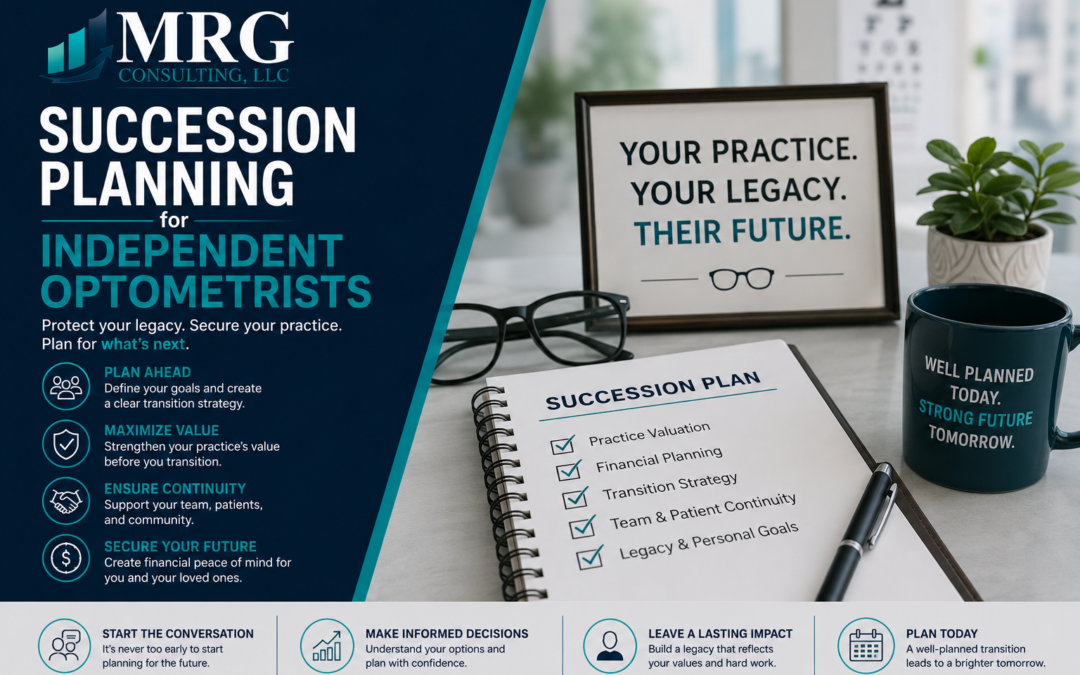
Succession planning is not simply about retirement. It is about protecting the value of what you have built, ensuring continuity of care for your patients, creating opportunities for your team, and preserving your financial future.
The earlier succession planning begins, the more options become available.
What Is Succession Planning?
Succession planning is the process of preparing for the eventual transfer of ownership, leadership, or management responsibilities within a practice.
A succession plan provides a roadmap for the future and helps ensure the practice remains successful regardless of when a transition occurs.
Effective succession planning addresses:
- Ownership transition
- Leadership development
- Financial preparation
- Practice value enhancement
- Patient continuity
- Team stability
It is not a single event—it is an ongoing process.
Why Many Owners Delay Planning
Succession planning is often postponed because owners feel they still have years before retirement.
Others avoid the conversation because:
- They have not identified a successor
- Retirement feels uncertain
- The practice is still growing
- Day-to-day operations take priority
Unfortunately, waiting too long can limit available options and reduce flexibility.
Unexpected health concerns, family circumstances, or market changes can accelerate timelines without warning.
Succession Is About More Than Retirement
Many owners assume succession planning only applies when they are ready to retire.
In reality, succession planning can support:
- Gradual ownership transitions
- Associate buy-in opportunities
- Family succession
- Internal leadership development
- Partnership structures
- Long-term independence strategies
The goal is creating options and preparing for the future.
Understanding Your Transition Goals
Every practice owner’s goals are different.
Some owners hope to:
- Sell to an associate
- Transition ownership to family members
- Develop internal leadership
- Remain involved part-time
- Sell to an outside buyer
- Maintain independence for as long as possible
Understanding your objectives helps shape the strategy that best fits your situation.
Increasing Practice Value Before Transition
Regardless of who ultimately acquires the practice, increasing value should be a priority.
Areas that often influence value include:
- Profitability
- Operational efficiency
- Leadership depth
- Patient retention
- Optical performance
- Revenue cycle management
- Financial reporting systems
A stronger business creates more attractive transition opportunities.
Developing Future Leaders
One of the most overlooked aspects of succession planning is leadership development.
Many practices depend heavily on the owner for:
- Decision-making
- Team management
- Problem-solving
- Operational oversight
Developing future leaders helps reduce owner dependence and creates greater organizational stability.
Leadership development may include:
- Management training
- Mentorship
- Increased responsibility
- Accountability systems
- Strategic involvement
Strong leaders strengthen the practice long before a transition occurs.
Protecting Patient Relationships
Patients often develop deep trust in their providers.
A successful succession plan helps ensure continuity and confidence throughout the transition process.
Clear communication and thoughtful planning can help:
- Maintain patient loyalty
- Preserve referral relationships
- Protect practice reputation
- Support long-term growth
Patients should feel reassured, not uncertain, during periods of change.
Creating Financial Readiness
Succession planning should also include financial preparation.
Owners should understand:
- Practice value
- Retirement goals
- Transition timelines
- Potential tax considerations
- Long-term financial needs
The more preparation completed in advance, the smoother the transition process tends to be.
Start Earlier Than You Think
The most successful succession plans are rarely created a year before retirement.
Many of the most effective transitions begin five to ten years—or more—before ownership changes occur.
Early planning allows time to:
- Improve value
- Develop leaders
- Strengthen systems
- Explore options
- Reduce risk
Time is often the most valuable asset in succession planning.
Building a Legacy
Succession planning is ultimately about more than ownership transfer.
It is about protecting the business you built, preserving the relationships you developed, and ensuring the practice continues to thrive long after your role changes.
The strongest succession plans create benefits for:
- Practice owners
- Employees
- Patients
- Future leaders
And they provide peace of mind that the future has been thoughtfully considered.
At MRG Consulting, we help practice owners strengthen operations, increase practice value, develop leadership, and prepare for successful transitions that support both personal and professional goals.
Because the legacy you’ve spent years building deserves a plan for the future.